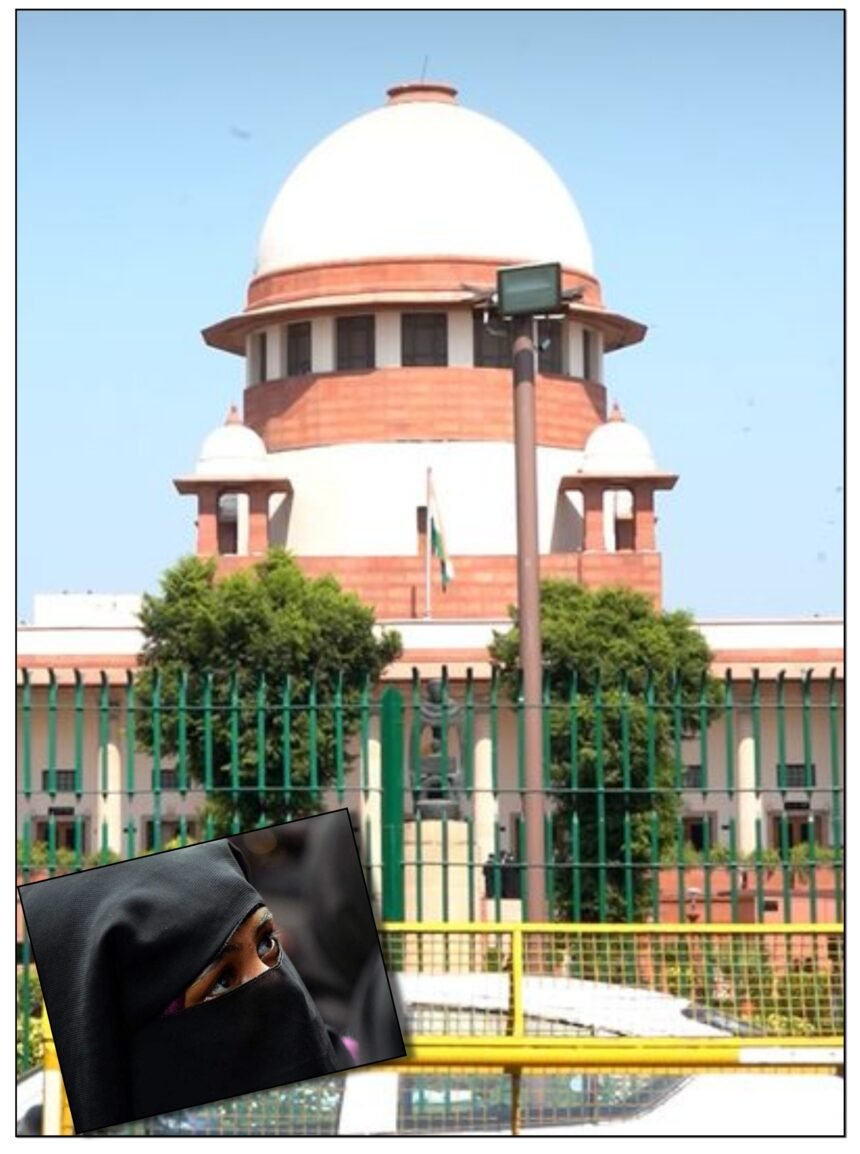
The Supreme Court of India on November 26, 2025, took a decisive step in scrutinizing the practice of Talaq-e-Hasan, a form of divorce under Muslim personal law. The bench, led by Chief Justice Surya Kant, examined the constitutional infirmities and social implications of the practice. According to Islamic jurists, Talaq-e-Hasan is a process of divorce that includes a period of reconciliation, allowing both husband and wife to reconsider their marital relationship. This method is considered revocable and provides an opportunity for rapprochement during the ninety-day waiting period. The divorce becomes final and irrevocable only after the third pronouncement, provided cohabitation does not resume. It is regarded as a more thoughtful and dignified form of divorce than instant talaq, giving the couple time to reflect. The primary actors in this process are the husband and wife; any council involved plays only a consultative role and may include a local committee, a Sharia board, or local court representatives.
The Supreme Court’s intervention must be viewed in the context of violations of the procedural requirements of Talaq-e-Hasan. It is the misuse and manipulation of the process for vested interests that compels victims to approach the highest court. The courtroom becomes both a mechanism and a bridge to equity, exposing the asymmetry in which men’s decisions dominate while women’s concerns remain unheard. The Court adopted a nuanced stance, seeking all relevant information from the parties involved. It questioned Ghulam Akhtar, the husband in the lead petition, who attempted to delegate the pronouncement of talaq to his lawyer through an unsigned notice. The Court issued strict directions to prevent procedural evasions that heighten women’s vulnerability.
The bench-comprising CJI Surya Kant, Justice Ujjal Bhuyan, and Justice N. Kotiswar Singh-summoned Akhtar not only to face questioning for avoiding responsibility but also to set a precedent. CJI Kant remarked, “You can instruct your advocate but cannot summon the courage to face your wife? This outsourcing of marital dissolution undermines the sanctity of the process.” The Court directed him to provide full support to Heena and their five-year-old child, rejecting the use of third parties and insisting that he personally communicate his intentions, as required by Sharia. Heena described her difficulties, including denial of passport renewal and school admission for her son, and the threat of polyandry allegations due to the unsigned notice. TheCourt assured expedited relief, including interim directions regarding documentation and custody.
This case reinforced the bench’s view that Talaq-e-Hasan-which was not struck down in the 2017 Shayara Bano judgment abolishing Talaq-e-Biddat-is violative of Articles 14 (equality) and 21 (life and dignity). The Court observed that “if talaq is to take place as per religious practice, then the entire procedure must be followed as prescribed.” It emphasized that a third party cannot be authorized to deliver the talaq, making such delegation unconstitutional and undermining women’s dignity and agency. Misuse of the process isolates women, exposes them to abandonment, and violates both constitutional protections and Islamic principles, which emphasize fair treatment and financial security for women during the divorce period. The Prophet himself discouraged divorce and encouraged reconciliation as the preferred course.
The Court also allowed the All India Muslim Personal Law Board (AIMPLB) and Samastha Kerala Jamiyyathul Ulama to intervene and present interpretations of Islamic marriage and divorce laws. The Qur’anic guidance in Surah At-Talaq calls for arbitration and equity, not the haste characteristic of Talaq-e-Biddat. Religious practice, the Court observed, must operate within constitutional limits. When personal laws allow unilateral decisions that deprive women of reciprocal rights-such as khula without forfeiture of mahr-it creates an urgent case for reform. The hearing stands as a powerful reminder that justice must protect the most vulnerable. The Court commended Heena’s courage, recognizing that many women suffer due to the misuse of religious procedures. Islamic teachings themselves demand justice; Surah At-Talaq warns believers not to expel or harass women during divorce proceedings. The Qur’an secures women’s rights through mahr, post-divorce maintenance, and independent property ownership, ensuring dignity and protection throughout the talaq process.
Altaf Mir
Ph.D Jamia Milia Islamia